 419-867-8570
When a child builds, explores or simply asks “Why?”, they’re doing far more than playing. They’re learning and growing. At Children’s Discovery Center, we believe every moment of curiosity holds the potential for discovery. Through play, observation and imagination, children uncover how the world works and how they can shape it.
How does curiosity drive early learning?
Curiosity is more than a fleeting feeling. It’s a powerful force for growth! Studies show that when children are curious, their brains release dopamine, which strengthens memory and learning. That’s why the simple act of wondering sparks deep understanding.
At CDC, we nurture curiosity by allowing children to explore their questions. Whether building a bridge from blocks or testing how fast ice melts in the sun, children are doing more than memorizing facts. They’re learning how to think, ask and discover.
Teach your child to think like a scientist.
Science begins with observation and imagination. In our Reggio Emilia-inspired classrooms, play is a form of research.
A puddle on the playground can lead to a study in evaporation.
A set of ramps and toy cars becomes a physics lab.
A patch of dirt can become a biology field site filled with worms, roots and endless possibilities.
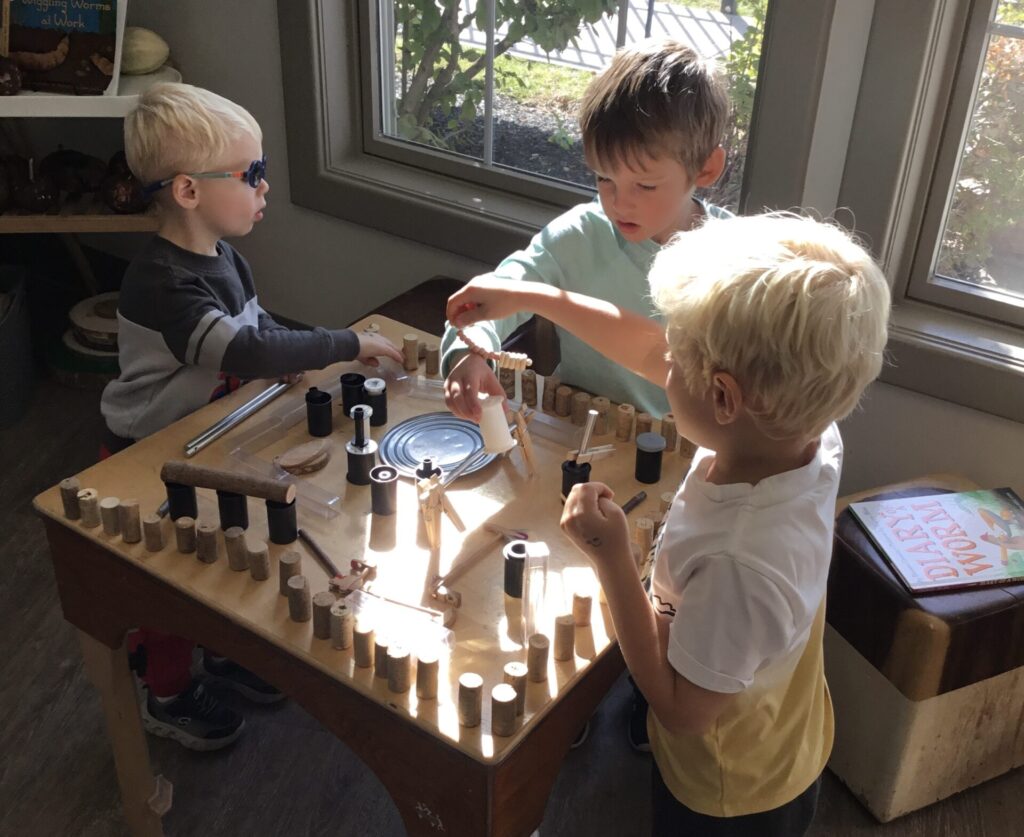
When children engage their senses, make predictions and test their ideas, they practice the same process real scientists use. Our teachers act as co-researchers, listening to children’s ideas, asking open-ended questions and helping them reflect on what they notice:
- “What changed when you added more water?”
- “Why do you think that happened?”
- “What could we try next?”
Each question deepens understanding and encourages persistence—skills that will serve them for life.
Let curiosity lead the way for growth and discovery.
The Reggio Emilia philosophy places the child at the center of the learning process, with curiosity as the guide. In this approach, the environment becomes the “third teacher,” filled with materials that invite exploration, like natural objects, light tables, measuring tools and art supplies.
A single question from a child, “Where does rain come from?”, can lead to days of investigation. Together, teachers and students might collect rainwater, chart the weather, build clouds from cotton and watch water evaporate. The process is open-ended, reflective and rooted in wonder.
Fostering this curiosity allows our children to grow naturally, guided by thoughtful teaching and a supportive environment.
Science-driven play also develops more than cognitive skills. It teaches patience, collaboration and confidence. When children see that an idea doesn’t work, they learn to try again. When they share results with friends, they practice communication and teamwork.
Most importantly, they learn that their questions matter. This mindset helps children grow into learners who are confident in exploring new ideas, both inside and outside the classroom.
Try these fun science experiments at home!
You don’t need a lab to spark a love of science. All you need is a little imagination! These simple, sensory-rich experiments are great for helping children explore in the classroom and at home:
Sink or Float
Fill a bin with water and gather objects like stones, corks and leaves. Have your child predict which will sink or float, and test each one.
What they learn: Observation, comparison, prediction and cause and effect
Color Mixing
Using clear cups of water with food coloring, let children mix colors and watch new ones form. Ask what happens when colors overlap.
What they learn: Basic chemistry, visual observation and creative experimentation
Shadow Play
Shine a flashlight on toys or cut-out shapes and move them closer or farther from the light. Let their imagination run wild by creating a shadow play together!.
What they learn: Light, distance and spatial relationships.
Remember, each small experiment encourages children to wonder, test and discover in a way that feels like play… because it is play! And the fun doesn’t have to end with these experiments. You can nurture curiosity in small ways every day:
- Ask open-ended questions like, “What do you think will happen if…?”
- Encourage your child to test ideas and talk about what they notice.
- Keep simple materials—measuring cups, recycled containers, magnifying glasses—available for hands-on exploration.
- Celebrate curiosity, not just correct answers.
By turning daily routines into experiments, you help your child see learning as a joyful, lifelong adventure.
Curiosity Grows at CDC
At Children’s Discovery Center, we see every “why?” as an opportunity. Through our Reggio Emilia approach and STEAM-inspired curriculum, children are encouraged to observe, question and imagine. Contact us today to learn more about our Reggio Emilia approach to learning, register your child and tour our facilities.